Buy 752.eu ?
We are moving the project
752.eu .
Are you interested in purchasing the domain
752.eu ?
domain@kv-gmbh.de · 0541-91531010
Buy 752.eu ?
Is linguistic design the same as linguistic devices?
No, linguistic design and linguistic devices are not the same. Linguistic design refers to the overall structure and organization of language, including factors such as syntax, semantics, and discourse patterns. On the other hand, linguistic devices are specific techniques or tools used within language to achieve certain effects, such as metaphors, similes, or alliteration. While linguistic devices are a part of linguistic design, they are just one component of the broader concept. **
What are non-linguistic signs and linguistic signs?
Non-linguistic signs are symbols or signals that convey meaning without the use of language, such as traffic lights, facial expressions, or body language. These signs rely on visual cues or gestures to communicate information. On the other hand, linguistic signs are symbols that represent specific meanings within a particular language system, such as words, letters, or numbers. Linguistic signs rely on the conventions and rules of language to convey meaning. **

Similar search terms for Linguistic
Top-Angebote
Products related to Linguistic:
-
VEGAZ ULS-752 Lambda sensorCable Length [mm]: 350; Number of circuits: 4; Oxygen Sensor: Finger-type Sensor, Heated; Oxygen Sensor: Diagnostic Probe; Construction Year from: 03/2000, 08/2000, 11/2002; TecDoc Engine Number: 13088; Vehicle type: NCP20; Transmission Type: Automatic Transmission; Engine Code: 1NZ-FE; Construction Year to: 11/2002; Specification: Alternative fitting; Exhaust System: after catalytic converter83,49 £*Shipping: 8,45 £Secure redirect to the provider
-
TOPRAN 109 752 ABS sensorFitting Position: Front Axle Left; Number of pins: 2; Supplementary Article / Supplementary Info Info 2: without cable; Length [mm]: 69; Braking/Driving Dynamics: for vehicles with ABS; Paired product: 109 753; TecDoc Engine Number: 4989, 4979, 4963, 4975, 4982, 15611, 12848, 9451, 9450, 4988, 15496; Construction Year from: 10/1993, 09/19997,99 £*Shipping: 8,45 £Secure redirect to the provider
-
SACHS 996 752 Coil springOuter Diameter [mm]: 119; Length [mm]: 363; Diameter: 12,5; Fitting Position: Rear Axle; Vehicle Equipment: for vehicles without level control, for vehicles without trailer hitch, for vehicles with trailer hitch; Suspension: for vehicles with standard suspension; Vehicle Equipment Line/Trim Level: Ghia, LX, Ambiente86,98 £*Shipping: 8,45 £Secure redirect to the provider
-
SACHS 993 752 Coil springLength [mm]: 322; Outer Diameter [mm]: 133; Diameter: 12; Fitting Position: Front Axle; Suspension: for vehicles with sports suspension; Transmission Type: Manual Transmission, Automatic Transmission, Manual Transmission, automatically operated; Vehicle Equipment: for vehicles with air conditioning, for vehicles without air conditioning; Construction Year to: 07/2009; Construction Year from: 08/2007124,98 £*Shipping: 8,45 £Secure redirect to the provider



-
What are good examples of linguistic and non-linguistic images?
Good examples of linguistic images include descriptive language that paints a vivid picture in the reader's mind, such as "the sun hung low in the sky, casting a warm golden glow over the fields." Non-linguistic images can include photographs, paintings, or other visual art that convey a specific mood or message without the use of words. For example, a photograph of a stormy sea with dark, churning waves can evoke a sense of danger and power without any accompanying text. Both linguistic and non-linguistic images can be powerful tools for communication and expression. **
-
What are linguistic aspects?
Linguistic aspects refer to the different components of language that are studied in linguistics. These aspects include phonetics (the study of speech sounds), phonology (the study of sound patterns), morphology (the study of word structure), syntax (the study of sentence structure), semantics (the study of meaning), and pragmatics (the study of language use in context). Understanding these linguistic aspects helps us analyze and interpret language in a systematic way. **
-
What are linguistic peculiarities?
Linguistic peculiarities refer to unique or unusual features found in a language that set it apart from others. These can include specific grammar rules, pronunciation patterns, vocabulary choices, or cultural influences that shape the way a language is spoken or written. Linguistic peculiarities can vary widely from one language to another, making each language distinct and interesting in its own way. **
-
What is linguistic redundancy?
Linguistic redundancy refers to the use of unnecessary or repetitive words, phrases, or information in communication. It can often be seen as a form of over-explaining or providing more information than is needed to convey a message. While some level of redundancy can help clarify communication and ensure understanding, excessive redundancy can lead to inefficiency and confusion in language. Overall, linguistic redundancy can be both a helpful tool for emphasizing key points and a hindrance to clear and concise communication. **

What are linguistic features?
Linguistic features are the characteristics of language that help to distinguish one language from another or one dialect from another. These features can include phonological features (such as the sounds used in a language), morphological features (such as word formation and inflection), syntactic features (such as word order and sentence structure), and semantic features (such as the meaning of words and how they are used in context). Linguistic features are essential for understanding and analyzing language and are used by linguists to study and compare different languages and dialects. **
What are linguistic devices?
Linguistic devices are techniques and structures used in language to convey meaning, create emphasis, and evoke certain emotions or responses from the audience. These devices can include figurative language such as metaphors and similes, as well as rhetorical devices like repetition and parallelism. They are used by writers and speakers to enhance the impact and effectiveness of their communication, and can be found in various forms of literature, poetry, speeches, and everyday conversation. **
Top-Angebote
Products related to Linguistic:
-
Zaffre Guilty by Definition: The instant Sunday Times bestselling linguistic mystery from Britain's wordsmith, Susie Dent (Clarendon Lexicographers)A coded letter. A missing woman. A truth waiting to be found. When an anonymous letter is delivered to the Clarendon English Dictionary office, it becomes rapidly clear that this is not the usual word-related enquiry. Instead, the letter hints at sinister events linked to a particular year. For editor Martha Thornhill, the date can mean only one thing: the summer her brilliant older sister Charlie went missing. Ten years on, Martha and her family are no closer to unravelling the mystery of Charlie's disappearance - until now. As more letters arrive, Martha and her team follow the linguistic clues to a troubling truth. It seems Charlie was keeping a powerful secret, and that someone is desperate to keep it well and truly buried. Guilty by Definition is a love letter not only to language but to the city of Oxford, wrapped within an intriguing mystery of a missing woman and considering the emotional aftershocks of her disappearance on those left behind.5,99 £*Shipping: 2,99 £Secure redirect to the provider
-
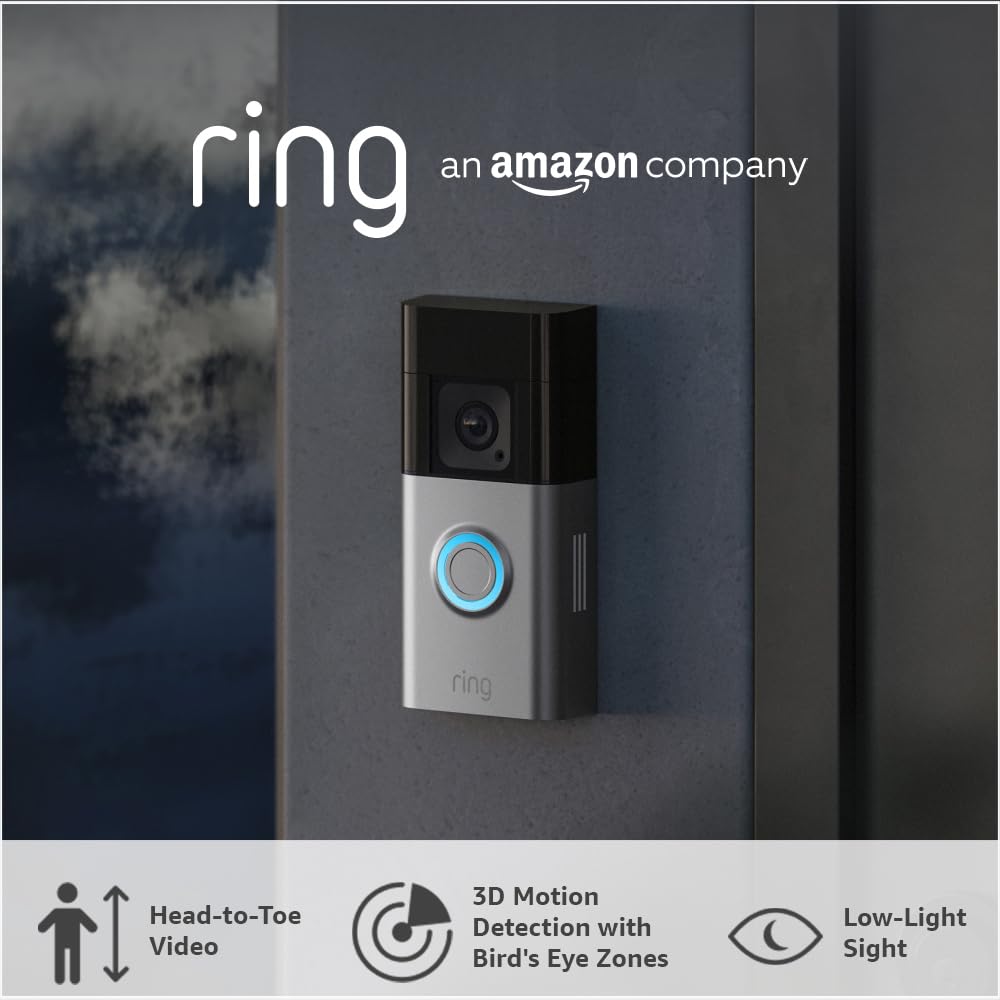
Ring Battery Video Doorbell Pro – Advanced Home Security & Connectivity, NewUpgrade your home security with the Ring Battery Video Doorbell Pro – Wireless Video Doorbell Security Camera . Designed to give you peace of mind, it delivers a head-to-toe 1536p HD view so you can see every detail clearly, from visitors to parcels at your doorstep. With advanced 3D Motion Detection and Bird’s Eye View , you’ll always know what’s happening around your home. The built-in colour night vision ensures crisp images even in the dark, while the wire-free battery design makes installation simple and flexible. Stay connected anywhere with instant notifications, two-way talk, and full integration with the Ring app, Alexa devices, and more. ✔️ Wireless video doorbell – Easy to install with a rechargeable battery, no wiring needed ✔️ 1536p HD head-to-toe view – See visitors and packages clearly in high definition ✔️ 3D Motion Detection & Bird’s Eye View – Advanced alerts and aerial perspective for extra security ✔️ Colour night vision – Crystal-clear video even in low light or darkness ✔️ Two-way talk with noise cancellation – Hear and speak to visitors in real time ✔️ Customisable motion zones – Focus on the areas that matter most ✔️ Smart alerts & notifications – Instant updates on your phone via the Ring app ✔️ Alexa compatible – Works seamlessly with Echo devices for hands-free monitoring ✔️ Quick-release battery pack – Easy to recharge and swap for uninterrupted security ✔️ Durable design – Built to withstand outdoor weather conditions The Ring Battery Video Doorbell Pro combines advanced motion detection, high-definition video, and smart home integration in one sleek device. Perfect for enhancing your home security, it ensures you never miss a visitor or delivery, day or night.174,49 £*Shipping: 0,00 £Secure redirect to the provider
-
VEGAZ ULS-752 Lambda sensorCable Length [mm]: 350; Number of circuits: 4; Oxygen Sensor: Finger-type Sensor, Heated; Oxygen Sensor: Diagnostic Probe; Construction Year from: 03/2000, 08/2000, 11/2002; TecDoc Engine Number: 13088; Vehicle type: NCP20; Transmission Type: Automatic Transmission; Engine Code: 1NZ-FE; Construction Year to: 11/2002; Specification: Alternative fitting; Exhaust System: after catalytic converter83,49 £*Shipping: 8,45 £Secure redirect to the provider
-
TOPRAN 109 752 ABS sensorFitting Position: Front Axle Left; Number of pins: 2; Supplementary Article / Supplementary Info Info 2: without cable; Length [mm]: 69; Braking/Driving Dynamics: for vehicles with ABS; Paired product: 109 753; TecDoc Engine Number: 4989, 4979, 4963, 4975, 4982, 15611, 12848, 9451, 9450, 4988, 15496; Construction Year from: 10/1993, 09/19997,99 £*Shipping: 8,45 £Secure redirect to the provider
-
Is linguistic design the same as linguistic devices?
No, linguistic design and linguistic devices are not the same. Linguistic design refers to the overall structure and organization of language, including factors such as syntax, semantics, and discourse patterns. On the other hand, linguistic devices are specific techniques or tools used within language to achieve certain effects, such as metaphors, similes, or alliteration. While linguistic devices are a part of linguistic design, they are just one component of the broader concept. **
-
What are non-linguistic signs and linguistic signs?
Non-linguistic signs are symbols or signals that convey meaning without the use of language, such as traffic lights, facial expressions, or body language. These signs rely on visual cues or gestures to communicate information. On the other hand, linguistic signs are symbols that represent specific meanings within a particular language system, such as words, letters, or numbers. Linguistic signs rely on the conventions and rules of language to convey meaning. **
-
What are good examples of linguistic and non-linguistic images?
Good examples of linguistic images include descriptive language that paints a vivid picture in the reader's mind, such as "the sun hung low in the sky, casting a warm golden glow over the fields." Non-linguistic images can include photographs, paintings, or other visual art that convey a specific mood or message without the use of words. For example, a photograph of a stormy sea with dark, churning waves can evoke a sense of danger and power without any accompanying text. Both linguistic and non-linguistic images can be powerful tools for communication and expression. **
-
What are linguistic aspects?
Linguistic aspects refer to the different components of language that are studied in linguistics. These aspects include phonetics (the study of speech sounds), phonology (the study of sound patterns), morphology (the study of word structure), syntax (the study of sentence structure), semantics (the study of meaning), and pragmatics (the study of language use in context). Understanding these linguistic aspects helps us analyze and interpret language in a systematic way. **
Similar search terms for Linguistic
-
SACHS 996 752 Coil springOuter Diameter [mm]: 119; Length [mm]: 363; Diameter: 12,5; Fitting Position: Rear Axle; Vehicle Equipment: for vehicles without level control, for vehicles without trailer hitch, for vehicles with trailer hitch; Suspension: for vehicles with standard suspension; Vehicle Equipment Line/Trim Level: Ghia, LX, Ambiente86,98 £*Shipping: 8,45 £Secure redirect to the provider
-
SACHS 993 752 Coil springLength [mm]: 322; Outer Diameter [mm]: 133; Diameter: 12; Fitting Position: Front Axle; Suspension: for vehicles with sports suspension; Transmission Type: Manual Transmission, Automatic Transmission, Manual Transmission, automatically operated; Vehicle Equipment: for vehicles with air conditioning, for vehicles without air conditioning; Construction Year to: 07/2009; Construction Year from: 08/2007124,98 £*Shipping: 8,45 £Secure redirect to the provider
-
FA1 103-752 Exhaust hangerMaterial: Elastomer, EPDM (ethylene propylene diene Monomer (M-class) rubber); Paired product: 103-952; TecDoc Engine Number: 30401, 29233, 24405, 26347, 29653, 32534; Exhaust System: for rear muffler, for catalytic converter; Required quantity: 2, 1, 3, 4; Construction Year from: 03/2018; Fitting Position: Centre, Rear Muffler6,59 £*Shipping: 8,45 £Secure redirect to the provider
-
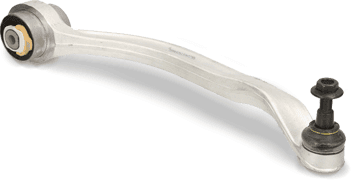
TOPRAN 629 752 Suspension armControl/Trailing Arm Type: Control Arm; Fitting Position: Front Axle Left; Material: Sheet Steel; Paired product: 629 751; Control/Trailing Arm Design: Triangular Control Arm; Supplementary Article / Supplementary Info Info 2: with ball joint, with rubber mount, with nut; Bolt/Nut Version: Castellated Nut and Split Pin; Surface: painted black, Cathodic Painting; Vehicle Production Country: France, Japan63,99 £*Shipping: 8,45 £Secure redirect to the provider
-
What are linguistic peculiarities?
Linguistic peculiarities refer to unique or unusual features found in a language that set it apart from others. These can include specific grammar rules, pronunciation patterns, vocabulary choices, or cultural influences that shape the way a language is spoken or written. Linguistic peculiarities can vary widely from one language to another, making each language distinct and interesting in its own way. **
-
What is linguistic redundancy?
Linguistic redundancy refers to the use of unnecessary or repetitive words, phrases, or information in communication. It can often be seen as a form of over-explaining or providing more information than is needed to convey a message. While some level of redundancy can help clarify communication and ensure understanding, excessive redundancy can lead to inefficiency and confusion in language. Overall, linguistic redundancy can be both a helpful tool for emphasizing key points and a hindrance to clear and concise communication. **
-
What are linguistic features?
Linguistic features are the characteristics of language that help to distinguish one language from another or one dialect from another. These features can include phonological features (such as the sounds used in a language), morphological features (such as word formation and inflection), syntactic features (such as word order and sentence structure), and semantic features (such as the meaning of words and how they are used in context). Linguistic features are essential for understanding and analyzing language and are used by linguists to study and compare different languages and dialects. **
-
What are linguistic devices?
Linguistic devices are techniques and structures used in language to convey meaning, create emphasis, and evoke certain emotions or responses from the audience. These devices can include figurative language such as metaphors and similes, as well as rhetorical devices like repetition and parallelism. They are used by writers and speakers to enhance the impact and effectiveness of their communication, and can be found in various forms of literature, poetry, speeches, and everyday conversation. **
* All prices are inclusive of VAT and, if applicable, plus shipping costs. The offer information is based on the details provided by the respective shop and is updated through automated processes. Real-time updates do not occur, so deviations can occur in individual cases. ** Note: Parts of this content were created by AI.