Buy 752.eu ?
We are moving the project
752.eu .
Are you interested in purchasing the domain
752.eu ?
domain@kv-gmbh.de · 0541-91531010
Buy 752.eu ?
How is a covalent bond formed when nonmetal atoms meet nonmetal atoms?
When nonmetal atoms meet nonmetal atoms, they can form covalent bonds by sharing electrons. Each nonmetal atom contributes one or more electrons to the bond, creating a shared electron pair between the two atoms. This sharing of electrons allows both atoms to achieve a more stable electron configuration, typically by filling their outermost energy levels. The strength of the covalent bond depends on the number of shared electrons and the distance between the nuclei of the bonded atoms. **
How does a nonmetal react with oxygen?
Nonmetals typically react with oxygen to form oxides. This reaction can be highly exothermic, meaning it releases a significant amount of heat. For example, when sulfur reacts with oxygen, it forms sulfur dioxide. Nonmetals generally have a high affinity for oxygen, and the resulting oxides can have a variety of properties, such as being acidic or basic. Overall, the reaction of nonmetals with oxygen is an important aspect of chemical reactivity and plays a role in various natural and industrial processes. **


Similar search terms for Nonmetal
Top-Angebote
Products related to Nonmetal:
-
TOPRAN 109 752 ABS sensorFitting Position: Front Axle Left; Number of pins: 2; Supplementary Article / Supplementary Info Info 2: without cable; Length [mm]: 69; Braking/Driving Dynamics: for vehicles with ABS; Paired product: 109 753; TecDoc Engine Number: 4989, 4979, 4963, 4975, 4982, 15611, 12848, 9451, 9450, 4988, 15496; Construction Year from: 10/1993, 09/19997,99 £*Shipping: 8,45 £Secure redirect to the provider
-
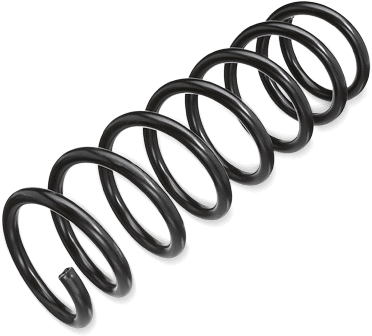
SACHS 996 752 Coil springOuter Diameter [mm]: 119; Length [mm]: 363; Diameter: 12,5; Fitting Position: Rear Axle; Vehicle Equipment: for vehicles without level control, for vehicles without trailer hitch, for vehicles with trailer hitch; Suspension: for vehicles with standard suspension; Vehicle Equipment Line/Trim Level: Ghia, LX, Ambiente86,98 £*Shipping: 8,45 £Secure redirect to the provider
-
SACHS 993 752 Coil springLength [mm]: 322; Outer Diameter [mm]: 133; Diameter: 12; Fitting Position: Front Axle; Suspension: for vehicles with sports suspension; Transmission Type: Manual Transmission, Automatic Transmission, Manual Transmission, automatically operated; Vehicle Equipment: for vehicles with air conditioning, for vehicles without air conditioning; Construction Year to: 07/2009; Construction Year from: 08/2007124,98 £*Shipping: 8,45 £Secure redirect to the provider
-
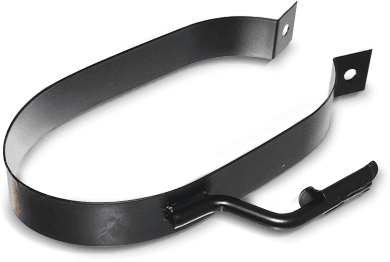
FA1 103-752 Exhaust hangerMaterial: Elastomer, EPDM (ethylene propylene diene Monomer (M-class) rubber); Paired product: 103-952; TecDoc Engine Number: 30401, 29233, 24405, 26347, 29653, 32534; Exhaust System: for rear muffler, for catalytic converter; Required quantity: 2, 1, 3, 4; Construction Year from: 03/2018; Fitting Position: Centre, Rear Muffler6,59 £*Shipping: 8,45 £Secure redirect to the provider


-
How do you write formulas for nonmetal oxides?
To write formulas for nonmetal oxides, you need to first identify the nonmetal element present in the oxide. Then, determine the oxidation number of the nonmetal element. Finally, write the formula by balancing the charges of the nonmetal element and oxygen. For example, the formula for carbon dioxide (CO2) is written by balancing the +4 oxidation number of carbon with the -2 oxidation number of oxygen. **
-
What are the differences between metal oxides and nonmetal oxides?
Metal oxides are compounds formed between a metal and oxygen, while nonmetal oxides are compounds formed between a nonmetal and oxygen. Metal oxides tend to be basic in nature, meaning they react with acids to form salts and water. Nonmetal oxides, on the other hand, tend to be acidic in nature, meaning they react with bases to form salts and water. Additionally, metal oxides typically have higher melting and boiling points compared to nonmetal oxides. **
-
How can one recognize if an element is a nonmetal?
Nonmetals can be recognized by several characteristics. They are typically located on the right side of the periodic table, are poor conductors of heat and electricity, and have dull or non-shiny appearances. Nonmetals also tend to have lower melting and boiling points compared to metals. Additionally, they often form negative ions when they react with metals. **
-
What are the properties of metal oxides and nonmetal oxides?
Metal oxides are typically basic in nature, meaning they react with acids to form salts and water. They are also typically solid at room temperature and have high melting and boiling points. Nonmetal oxides, on the other hand, are usually acidic in nature, meaning they react with bases to form salts and water. They are often gases or liquids at room temperature and have lower melting and boiling points compared to metal oxides. Both types of oxides play important roles in various chemical reactions and industrial processes. **

Ionic bonding always occurs between a metal and a nonmetal.
Ionic bonding always occurs between a metal and a nonmetal because of the large difference in electronegativity between the two types of elements. Metals have low electronegativity and tend to lose electrons, while nonmetals have high electronen **
What is an electron transfer reaction between a metal and a nonmetal?
An electron transfer reaction between a metal and a nonmetal occurs when the metal atom loses one or more electrons to the nonmetal atom. This transfer of electrons results in the formation of ions, with the metal forming a positively charged ion (cation) and the nonmetal forming a negatively charged ion (anion). This type of reaction is characteristic of ionic bonding, where the attraction between the oppositely charged ions leads to the formation of an ionic compound. Examples of such reactions include the formation of sodium chloride (NaCl) when sodium (a metal) reacts with chlorine (a nonmetal). **
Top-Angebote
Products related to Nonmetal:
-
Ring Battery Video Doorbell Pro – Advanced Home Security & Connectivity, NewUpgrade your home security with the Ring Battery Video Doorbell Pro – Wireless Video Doorbell Security Camera . Designed to give you peace of mind, it delivers a head-to-toe 1536p HD view so you can see every detail clearly, from visitors to parcels at your doorstep. With advanced 3D Motion Detection and Bird’s Eye View , you’ll always know what’s happening around your home. The built-in colour night vision ensures crisp images even in the dark, while the wire-free battery design makes installation simple and flexible. Stay connected anywhere with instant notifications, two-way talk, and full integration with the Ring app, Alexa devices, and more. ✔️ Wireless video doorbell – Easy to install with a rechargeable battery, no wiring needed ✔️ 1536p HD head-to-toe view – See visitors and packages clearly in high definition ✔️ 3D Motion Detection & Bird’s Eye View – Advanced alerts and aerial perspective for extra security ✔️ Colour night vision – Crystal-clear video even in low light or darkness ✔️ Two-way talk with noise cancellation – Hear and speak to visitors in real time ✔️ Customisable motion zones – Focus on the areas that matter most ✔️ Smart alerts & notifications – Instant updates on your phone via the Ring app ✔️ Alexa compatible – Works seamlessly with Echo devices for hands-free monitoring ✔️ Quick-release battery pack – Easy to recharge and swap for uninterrupted security ✔️ Durable design – Built to withstand outdoor weather conditions The Ring Battery Video Doorbell Pro combines advanced motion detection, high-definition video, and smart home integration in one sleek device. Perfect for enhancing your home security, it ensures you never miss a visitor or delivery, day or night.174,49 £*Shipping: 0,00 £Secure redirect to the provider
-
VEGAZ ULS-752 Lambda sensorCable Length [mm]: 350; Number of circuits: 4; Oxygen Sensor: Finger-type Sensor, Heated; Oxygen Sensor: Diagnostic Probe; Construction Year from: 03/2000, 08/2000, 11/2002; TecDoc Engine Number: 13088; Vehicle type: NCP20; Transmission Type: Automatic Transmission; Engine Code: 1NZ-FE; Construction Year to: 11/2002; Specification: Alternative fitting; Exhaust System: after catalytic converter83,49 £*Shipping: 8,45 £Secure redirect to the provider
-
TOPRAN 109 752 ABS sensorFitting Position: Front Axle Left; Number of pins: 2; Supplementary Article / Supplementary Info Info 2: without cable; Length [mm]: 69; Braking/Driving Dynamics: for vehicles with ABS; Paired product: 109 753; TecDoc Engine Number: 4989, 4979, 4963, 4975, 4982, 15611, 12848, 9451, 9450, 4988, 15496; Construction Year from: 10/1993, 09/19997,99 £*Shipping: 8,45 £Secure redirect to the provider
-
SACHS 996 752 Coil springOuter Diameter [mm]: 119; Length [mm]: 363; Diameter: 12,5; Fitting Position: Rear Axle; Vehicle Equipment: for vehicles without level control, for vehicles without trailer hitch, for vehicles with trailer hitch; Suspension: for vehicles with standard suspension; Vehicle Equipment Line/Trim Level: Ghia, LX, Ambiente86,98 £*Shipping: 8,45 £Secure redirect to the provider
-
How is a covalent bond formed when nonmetal atoms meet nonmetal atoms?
When nonmetal atoms meet nonmetal atoms, they can form covalent bonds by sharing electrons. Each nonmetal atom contributes one or more electrons to the bond, creating a shared electron pair between the two atoms. This sharing of electrons allows both atoms to achieve a more stable electron configuration, typically by filling their outermost energy levels. The strength of the covalent bond depends on the number of shared electrons and the distance between the nuclei of the bonded atoms. **
-
How does a nonmetal react with oxygen?
Nonmetals typically react with oxygen to form oxides. This reaction can be highly exothermic, meaning it releases a significant amount of heat. For example, when sulfur reacts with oxygen, it forms sulfur dioxide. Nonmetals generally have a high affinity for oxygen, and the resulting oxides can have a variety of properties, such as being acidic or basic. Overall, the reaction of nonmetals with oxygen is an important aspect of chemical reactivity and plays a role in various natural and industrial processes. **
-
How do you write formulas for nonmetal oxides?
To write formulas for nonmetal oxides, you need to first identify the nonmetal element present in the oxide. Then, determine the oxidation number of the nonmetal element. Finally, write the formula by balancing the charges of the nonmetal element and oxygen. For example, the formula for carbon dioxide (CO2) is written by balancing the +4 oxidation number of carbon with the -2 oxidation number of oxygen. **
-
What are the differences between metal oxides and nonmetal oxides?
Metal oxides are compounds formed between a metal and oxygen, while nonmetal oxides are compounds formed between a nonmetal and oxygen. Metal oxides tend to be basic in nature, meaning they react with acids to form salts and water. Nonmetal oxides, on the other hand, tend to be acidic in nature, meaning they react with bases to form salts and water. Additionally, metal oxides typically have higher melting and boiling points compared to nonmetal oxides. **
Similar search terms for Nonmetal
-
SACHS 993 752 Coil springLength [mm]: 322; Outer Diameter [mm]: 133; Diameter: 12; Fitting Position: Front Axle; Suspension: for vehicles with sports suspension; Transmission Type: Manual Transmission, Automatic Transmission, Manual Transmission, automatically operated; Vehicle Equipment: for vehicles with air conditioning, for vehicles without air conditioning; Construction Year to: 07/2009; Construction Year from: 08/2007124,98 £*Shipping: 8,45 £Secure redirect to the provider
-
FA1 103-752 Exhaust hangerMaterial: Elastomer, EPDM (ethylene propylene diene Monomer (M-class) rubber); Paired product: 103-952; TecDoc Engine Number: 30401, 29233, 24405, 26347, 29653, 32534; Exhaust System: for rear muffler, for catalytic converter; Required quantity: 2, 1, 3, 4; Construction Year from: 03/2018; Fitting Position: Centre, Rear Muffler6,59 £*Shipping: 8,45 £Secure redirect to the provider
-
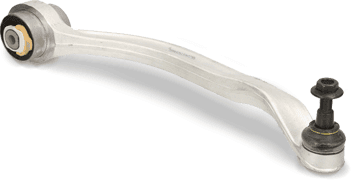
TOPRAN 629 752 Suspension armControl/Trailing Arm Type: Control Arm; Fitting Position: Front Axle Left; Material: Sheet Steel; Paired product: 629 751; Control/Trailing Arm Design: Triangular Control Arm; Supplementary Article / Supplementary Info Info 2: with ball joint, with rubber mount, with nut; Bolt/Nut Version: Castellated Nut and Split Pin; Surface: painted black, Cathodic Painting; Vehicle Production Country: France, Japan63,99 £*Shipping: 8,45 £Secure redirect to the provider
-
How can one recognize if an element is a nonmetal?
Nonmetals can be recognized by several characteristics. They are typically located on the right side of the periodic table, are poor conductors of heat and electricity, and have dull or non-shiny appearances. Nonmetals also tend to have lower melting and boiling points compared to metals. Additionally, they often form negative ions when they react with metals. **
-
What are the properties of metal oxides and nonmetal oxides?
Metal oxides are typically basic in nature, meaning they react with acids to form salts and water. They are also typically solid at room temperature and have high melting and boiling points. Nonmetal oxides, on the other hand, are usually acidic in nature, meaning they react with bases to form salts and water. They are often gases or liquids at room temperature and have lower melting and boiling points compared to metal oxides. Both types of oxides play important roles in various chemical reactions and industrial processes. **
-
Ionic bonding always occurs between a metal and a nonmetal.
Ionic bonding always occurs between a metal and a nonmetal because of the large difference in electronegativity between the two types of elements. Metals have low electronegativity and tend to lose electrons, while nonmetals have high electronen **
-
What is an electron transfer reaction between a metal and a nonmetal?
An electron transfer reaction between a metal and a nonmetal occurs when the metal atom loses one or more electrons to the nonmetal atom. This transfer of electrons results in the formation of ions, with the metal forming a positively charged ion (cation) and the nonmetal forming a negatively charged ion (anion). This type of reaction is characteristic of ionic bonding, where the attraction between the oppositely charged ions leads to the formation of an ionic compound. Examples of such reactions include the formation of sodium chloride (NaCl) when sodium (a metal) reacts with chlorine (a nonmetal). **
* All prices are inclusive of VAT and, if applicable, plus shipping costs. The offer information is based on the details provided by the respective shop and is updated through automated processes. Real-time updates do not occur, so deviations can occur in individual cases. ** Note: Parts of this content were created by AI.